
Activities: the local labs
Four labs across the Campania Region engaging young people (aged 14–35) on digital citizenship, public sociology, sport and educational inclusion.
Local labs
The local labs are the applied component of PARTECIPA — Giovani Campania: not courses or lectures, but participatory working spaces where young people experiment, co-design and share results. Each lab takes place in a specific local context, with a partner association that ensures its local roots, and is linked to a MOOC module.
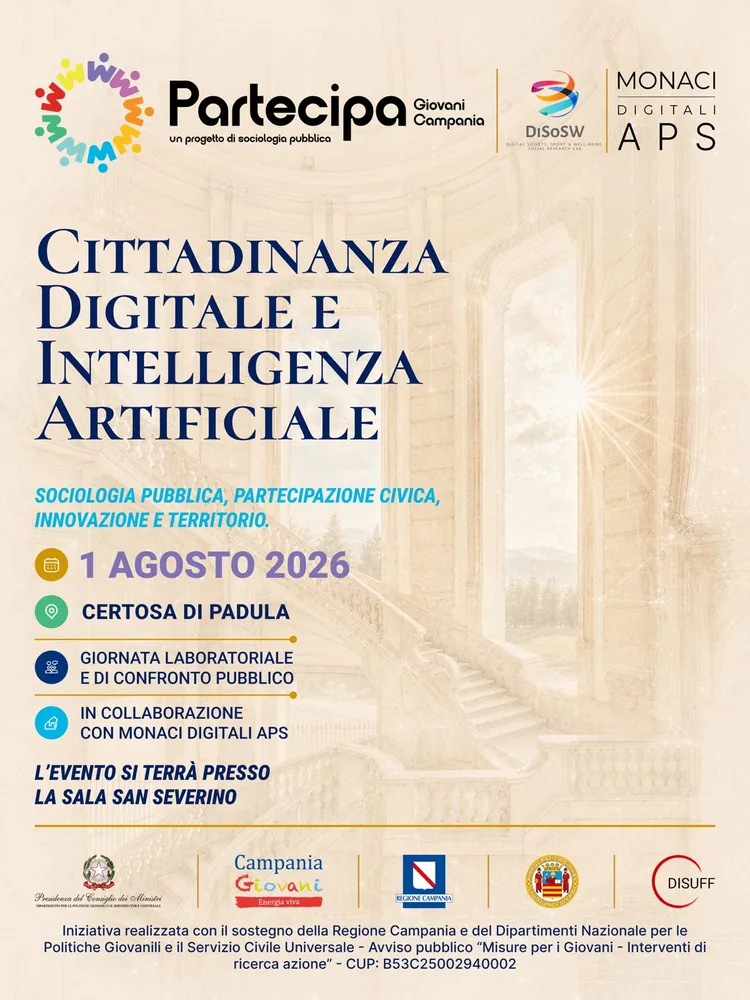
Digital Citizenship and Artificial Intelligence
Public sociology, civic participation, innovation and local development.
Programme and materials See the poster
Attending the event? Register in a minute: a few details help us organise the welcome desk and the project’s research.
Register for the event
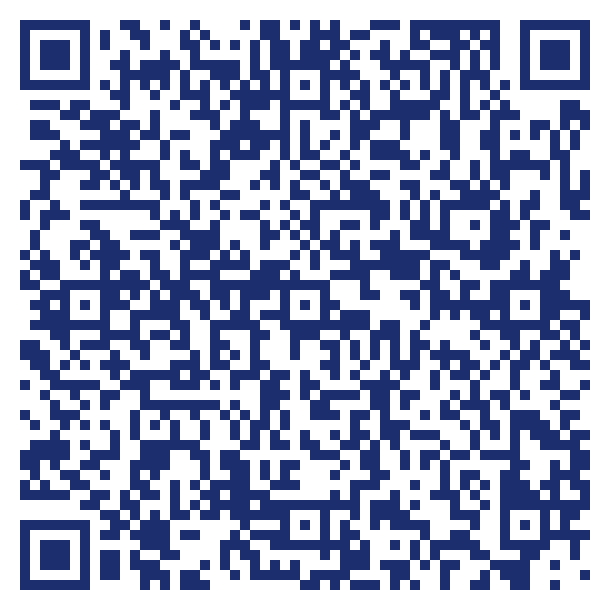 Scan the QR code with your phone to register
The workshop of 1 August: «The opportunity radar»
The afternoon of the day at the Certosa di Padula is a guided building workshop: not a lecture, not a debate. We all work together on a single project and what comes out of it is not a prototype to show, but an automation that keeps running by itself every week and is donated to a local public office.
What we build
An agent that every Monday morning reads the funding portals — Regione Campania, Sviluppo Campania, the Youth Policy Department, Eurodesk, municipal notices — keeps only what concerns local young people and rewrites each call in five readable lines: who can apply, what is needed, by when, how much it is worth, official link. The digest reaches the office, which approves it and forwards it to associations, schools and young people.
Opportunities for young people already exist, but they are scattered across dozens of portals and written in administrative language: those who would benefit most often never see them.
The tools we will use
- Google Sheets + Apps ScriptThe engine: it collects the opportunities and restarts by itself every Monday. Free, inside the organisation’s own account.
- Gemini API (free version)It reads the calls, discards what is not relevant, extracts the five facts and rewrites them in plain language.
- Gmail and Google GroupsIt delivers the weekly digest, always after a person has approved it.
All free, from the browser: no installation, no subscription, no programming skills.
What participants need
- A phone or a laptop per group — whoever does not have one works with someone who does.
- A free Google account; if you do not have one, we create it in the room in two minutes.
- No technical skills: the session is run step by step.
- No personal data: we only work on public documents, which we bring.
The radar has been built, and now it belongs to everyone. The tool that came out of the workshop is public and open: source code under the MIT licence, a sheet to duplicate with one click and a bilingual step-by-step guide, so that anyone can rebuild it for their own town, school or association.
The four labs
Public Sociology in Action Lab
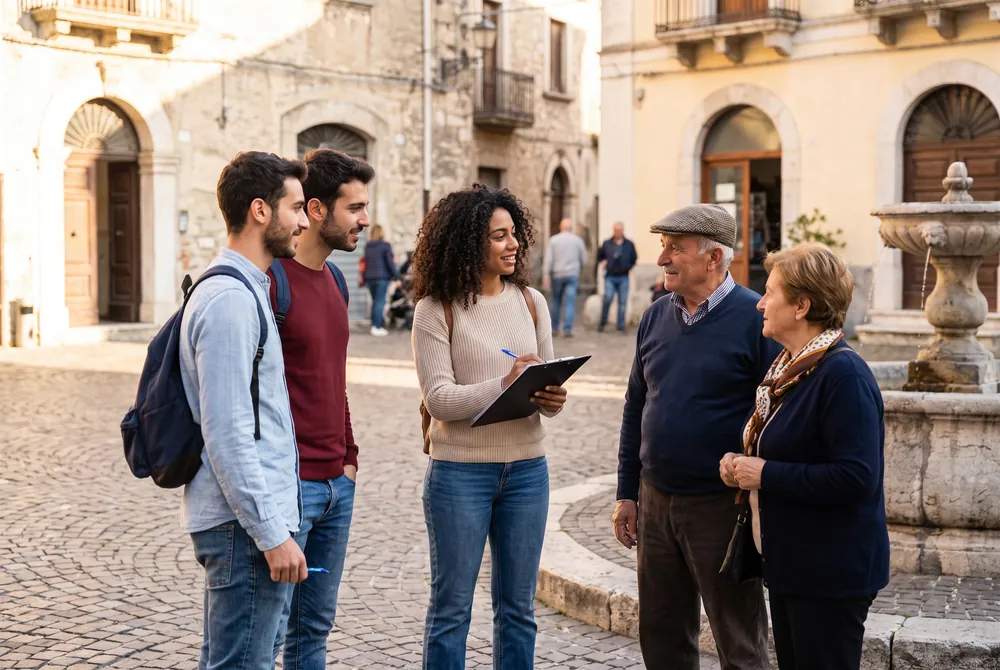
Participatory mini-research, listening to local needs, reading open data, public sharing of results. It introduces young people to applied public sociology: how to listen to a community, how to read local data, how to build and share research in an accessible and useful way.
Digital Civic Lab
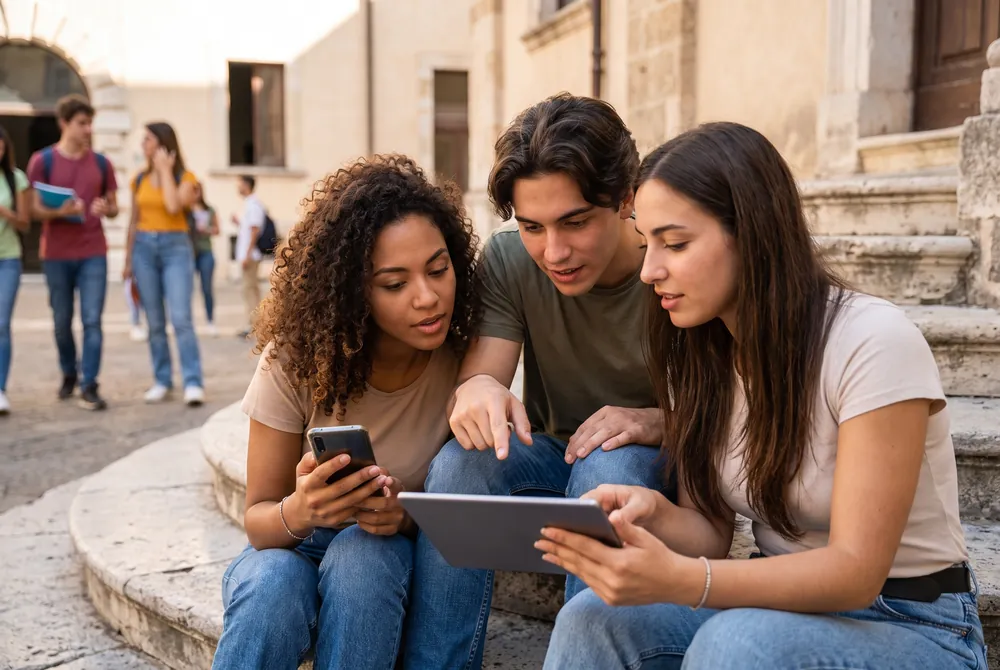
Digital citizenship, media literacy, critical use of artificial intelligence, safety and online participation. It helps young people navigate the digital ecosystem critically and responsibly: spotting disinformation, understanding algorithms, protecting their online identity and taking part in civic processes mediated by technology.
Sport, Inclusion & Quality of Life Lab
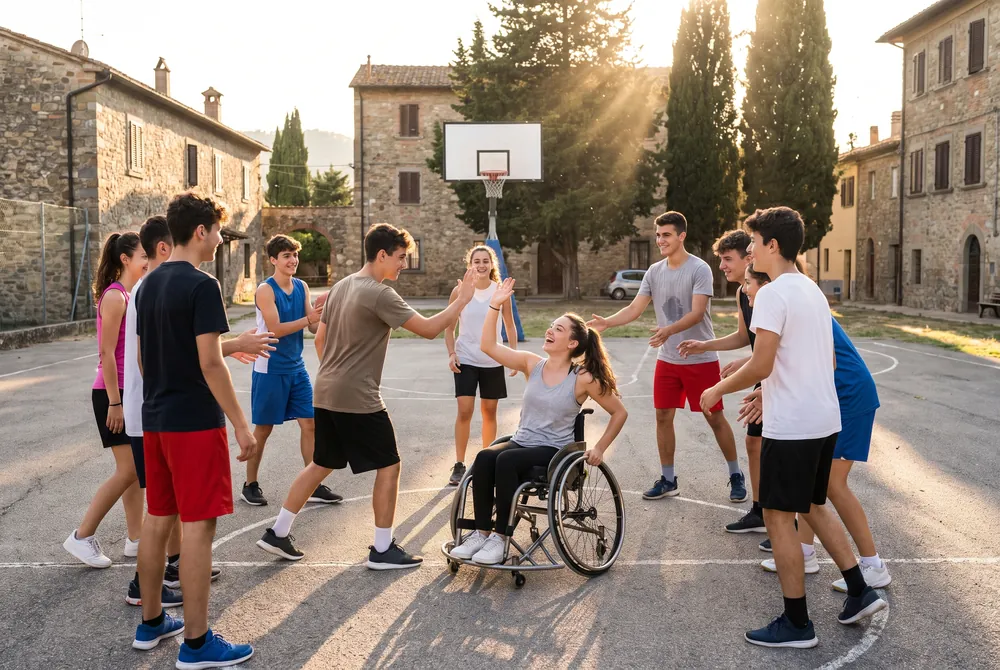
Sport as a tool for participation, social cohesion and tackling local inequalities. It explores the role of sport in the lives of young people in Campania and in building community ties, with attention to local fragilities and to the opportunities for inclusion through physical activity and local sports settings.
Pedagogy & Educational Inclusion Lab
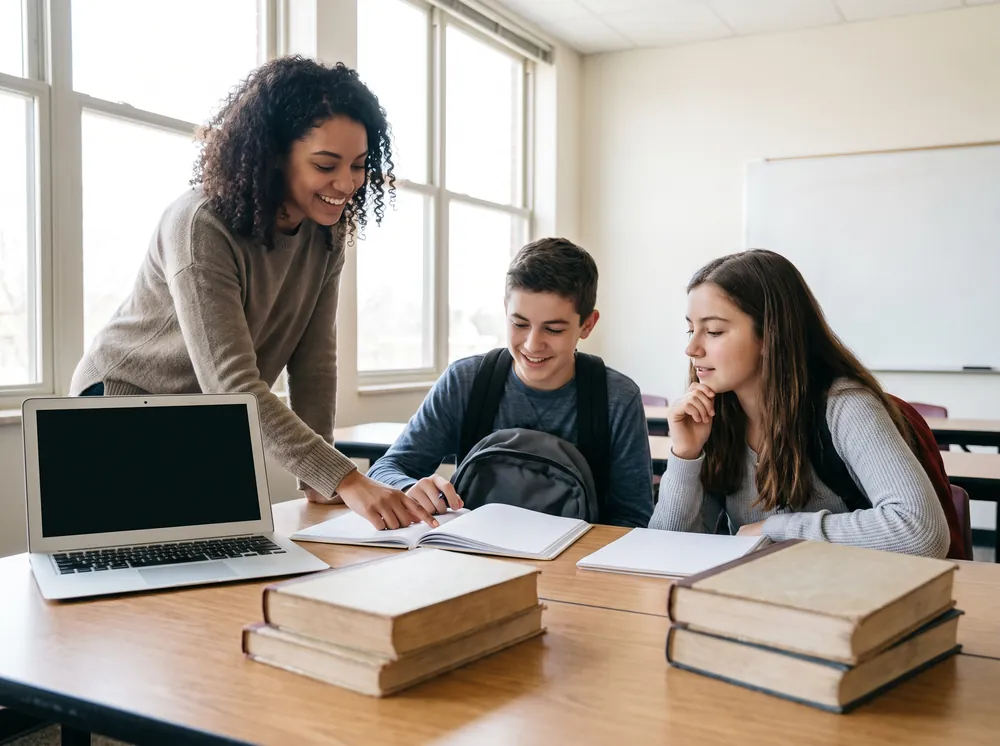
Inclusive education, learning support, tackling educational inequalities and enhancing local educational settings. It addresses the challenges of school and training inclusion in Campania, working with young people, educators and communities to identify inclusive practices, build support tools and produce concrete proposals.
How we work: the formats
The activities use participatory and collaborative methods. There are no lectures: participants are active protagonists.
Training and hands-on workshops
Hands-on sessions on specific topics, with exercises, tools and the production of concrete materials.
Public meetings
Dialogue with experts, stakeholders and representatives of local institutions, open to the community.
Small-group labs
Collaborative working spaces for listening, co-design and experimentation.
Project work and micro-proposals
Every path ends with a concrete result: a proposal, a document, an action.
Public sharing of results
The materials produced are presented publicly and made available as open outputs.
Labs and MOOC: an integrated system
The local labs are not independent from the MOOC: they are its applied part. Each lab is linked to one of the four modules of the online course, so theory and practice go together.
Those taking part in the labs are encouraged to complete the corresponding MOOC module; those following the MOOC online find in the labs the chance to put into practice what they have learnt, in their own local community. Discover the training path
Where we are
The labs are spread across the provinces of Salerno, Naples and Caserta, in a network with the partner associations of each area.
- Institutional actors · University and Region
- Third sector · partner associations of the labs
- Naples — Regione Campania / Campania Giovani
- Fisciano (SA) — University of Salerno / DISUFF
- Salerno — Sodalis ETS-CSV Salerno, AICS Comitato Provinciale APS, Moby Dick APS
- Cervino (CE) — Solidarietà Cervinese
- Mercato San Severino (SA) — ASD Crescere Insieme oltre il Teatro APS
- Padula (SA) — Associazione Monaci Digitali
- Villammare, Vibonati (SA) — Associazione Villammare Film Festival